There's just
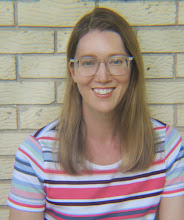
got to be a few four-leafers in this pile of clover…because today, we’re joined by Weronika Janczuk, an intern and writer who’s had the ability to work in the publishing world before graduating from high school!
As a teen with priceless insider experience, Weronika was kind enough to share her thoughts on the YA genre…
* At a young age, you've had the opportunity to work both with a publishing house and a couple of literary agencies. Tell us a little bit about how you landed those positions and about the work you've done...
My first internship - at Llewellyn/Flux - I landed by communicating directly with the acquisitions editor there, Brian Farrey, and I was there for a few months to earn school credit. As for the agencies, I now have two internships with literary agencies (one as of December, the other as of this month), and I scored both of those also by communicating with the agents.
While I was with Brian, I read the slush pile, I read agented submissions, I worked with contracts, I made sales packets, I mailed stuff, etc. With the agencies, I read either the slush pile or partial/full manuscripts or both, and at one agency I also fulfill secretarial responsibilities (logging submissions, etc.).
* How did working for a publishing house change the way your write?
I think the only change that's happened with my writing, and this is a result of both internships, regards how I approach the novel as a medium. I've learned to see the big picture right off the bat with my novels and I don't write for the word count anymore but instead when things feel right. Organization, rising action and tension are key.
* How has working for literary agencies changed the way you read?
I am much harsher and, well, more judgmental. I've also learned to recognize good literature even if I hate it; I've had to look for the signs of good writing versus topics or characters or plots that I like. I've had to analyze why something works (and this has also helped with the writing) as I write reader reports and must be able to pinpoint the reason for my recommendation.
* What's the most important lesson you learned at the publishing house? The agencies?
Take your time. Really. We see so, so many rare great submissions that, if you take another month, another year, you'll be the person an agent or editor jumps up and down about when your manuscript comes through.
* You've had a chance to see submissions in their earliest form. How does it change the way you view what's on the shelf? Or how you review published works on your blog?
This is a tough question. I respect all the literature on the shelf - someone must have jumped up and down about it to get it there. At the same time, as a result of that, I've become pickier in what I read and how I review it. I still have personal preferences, and I still think that there are some books that shouldn't have been published in their stages (or at all). But I read so, so much that most of what I read becomes clumped together in this 'good, but not great' group and thus every book that becomes my favorite must have done something incredible in terms of writing or storytelling.
* Did you ever feel that, as a teen reader, you would have acquired a book or author that was passed up on?
(Or, conversely, did you ever encounter an instance in which a book was acquired or an author taken on as a client, and you just couldn't understand why? In each instance, how did you deal with it...and what did it teach you about the publishing world?)
There has never been an instance in which the agents or editors I work with haven't acquired something I really, really thought deserved it - something I would have fought for, per se. Most full manuscripts I read and recommend wholeheartedly - of which there are very, very few - are carefully considered; if they are passed on, it's because it wasn't good enough or loved enough, and there's been only one instance in which I was surprised at the justification for the pass. As for the other side, yes, there was an acquisition once of a book that I didn't think anyone would want to read, but that only demonstrates the industry's subjectivity. Good literature will be recognized by someone; that's really all anyone in the industry has to go on.
* How has editorial work changed your relationship with your teachers—especially your English teachers? If you could tell your fellow students anything about the editorial process (revision), what would it be?
Most of my teachers don't know that I do this. Unfortunately, they're solely English teachers (except for one, who did work in the publishing industry as a college student) - this end of the publishing industry is an unknown world for them, as it is for most people. Other than writing and revising coming very, very easily for me - and my grades representing that, my teachers recognizing that - there hasn't been anything different in how I interact with them.As for my fellow students . . . well, that's hard, as fewer and fewer teens are writing well. I would tell them sometimes it's necessary to cut your work to pieces and start over. I'm always reminded of the instance in which I made a girl cry with my critique - she wrote well, but the paper just didn't work. Learning how to accept criticism, roll with it, and learn from it is key.
* What were your favorite YA books before your experiences in the publishing world? After? How did your tastes change, and why?
My favorite YA book remains THE BOOK THIEF. I've never had a huge interest personally in the commercial fiction published. I like to read more mature fiction. As a result, I love all of the books with crossover appeal - i.e., THE LOVELY BONES, published as adult but read widely by YAs - and books with a literary or historical feel. Laurie Halse Anderson, M.T. Anderson, and others are my favorite.
(So why do I like working on the publishing side with commercial? I can love commercial stuff but, ultimately, just won't prefer it.)
* How have your experiences changed your life goals? What would you most like to be doing in a few years—editing? Writing? Agenting? Why?
It's made my goals more concrete. This fall, I will begin studying at New York University, and I'll be pursuing English/Creative Writing/Business. I want to continue interning, and I'm working on finding a position as a junior agent so I can take on my own clients, and by the time I graduate from college I want a concrete list of clients, and I want to agent for the rest of my life. I love it. Adore it. As for writing, I want to have two books out by the time I graduate. The book I plan to query with is getting to the finish line. That's the balance for me - actively agenting during the day, writing during the night (I struggle with writing any other time of the day anyway).
* How did you feel about the YA genre before your experiences? After?
I struggled with a lot of the literature in YA - I skipped the YA genre as a reader - and now I'm more in tune with the possibilities, the less-read books that have as much worth - or more worth - than the books that are talked about. It's an interesting, dynamic genre, and it does allow readers and writers to explore every single possible issue, sometimes in the edgiest of ways.
* What, as a teen, do you feel you brought to the publishing house / agencies that was unique...What separated you from older co-workers?
Oh, boy, I wish I wasn't eighteen years old. I feel consistently that I have to prove my worth. My age came in handy when I was at Flux because I was able to recognize the literature that sounded true to the teens that I know, interact with, and listen to. Otherwise, I read adult submissions, and so I've had to be as judgmental and as in tune as my older co-workers. In most cases, that's easy, because I read actively in adult genres. Sometimes, though, because I've had much less time reading and have, well, read less books, I don't necessarily know all the niches and must do some research to better recommend something.
* What is the single most important lesson YA writers can learn from teens?
Holly! What's with the tough questions? ;)
Be sure you're meant to write for young adults. Adult fiction has many young narrators - there's a key difference in how you handle the topic, and you have to accurately take on the challenge of voice. Once you do, in whatever genre you choose, write honest and write deep. Hold nothing back.
…You can always catch up with Weronika at her own blog:
weronikajanczuk.com…