Showing posts with label YA Thoughts. Show all posts
Thursday, September 22, 2016
YA IN THE CLASSROOM - SPARK AND FLAWS
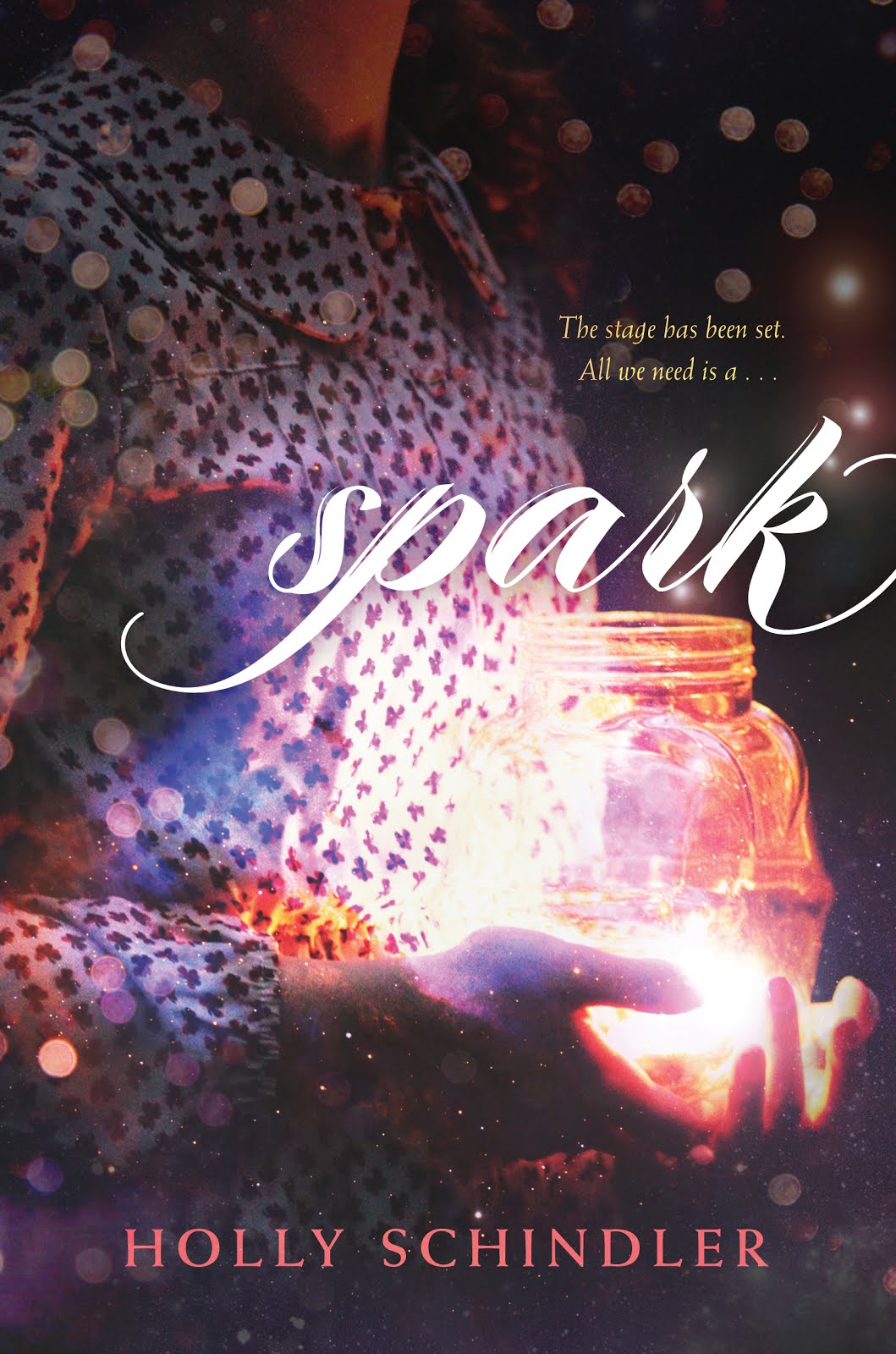
SPARK features two characters who have obvious "flaws": one has a birthmark, another a stutter.
This topic lends itself to great high school class discussion...
We all have things about
ourselves that we wish we could change. (If
only, we all think, I were prettier,
taller. Or, I wish I could make my
nose smaller, get rid of the scar on my chin, not have such frizzy hair, clear
up my skin…) If your fantasy could be granted, and what you perceive to be your
biggest flaw was magically erased, how would it change you? Would you behave
differently? Would you finally talk to your crush, go out for the lead in the
play? Would you step into the spotlight? Would you finally be brave enough to
make your mark?
Students can discuss the depiction of the external in SPARK--this includes costumes that appear throughout. They can also discuss the external vs. internal lives of the characters--and even of themselves. After all, sometimes, the best way to connect and interact with a book is by seeing connections between the text and the "real world."
Children are always being told the inside of a person is the most important part--and it is! But what are the barriers to getting to view a person's interior? How do our own opinions of our exterior, our perceptions of our own "flaws" keep people from seeing our own insides?
Are you a teacher using SPARK in your classroom? Contact me at hollyschindlerbooks (at) gmail (dot) com for a Skype.
Monday, August 22, 2016
FOR TEACHERS - LOCAL COLOR WRITING
I drew from my own Southwest Missouri surroundings in order to describe the Avery Theater in my latest YA, SPARK. The following video can be used in your classrooms to introduce the concept of local color to your students, and to get them revved to do a local color piece of their own:
Thursday, April 21, 2016
LOCAL COLOR AND SPARK
I love the fact that teachers have been using THE JUNCTION for classroom assignments--so much so, I wanted to get the ball rolling on some ideas for how to use SPARK in the classroom as well (the book is clean and lends itself to some great literary discussions; it's great for middle school readers on up). I put together a short local color vid in which I show young readers how I used my own surroundings as inspiration, and also challenge them to do a local color piece of their own:
Sunday, March 16, 2014
DEAR BLOGGERS - FERAL IS YOURS
Yesterday, I sent my notes on the first-pass pages for FERAL to my editor. This was my last chance to make any changes to the manuscript.
I have to admit, I had a funny feeling sending the book along yesterday. You'll be hearing more about the journey FERAL took from first draft to publication in the next few months, but I initially drafted the book a decade ago, as an MG novel. Claire, my protagonist, has gone through about a hundred name do-overs and personality revamps; she's changed more than any MC in any of my books, actually.
Now, though, I have to let her go. Claire's not mine anymore; she belongs to my readers and bloggers. There's a slight sadness to letting a project go, but there's also a new excitement to it, too. Claire's yours; I hope the journey you'll take with Claire as a reader will be every bit as fulfilling as mine was as a writer.
Can't wait to introduce you...
Friday, August 23, 2013
PLAYING HURT & A BLUE SO DARK - NEW VIDS
I'm gearing up to add a bunch of new videos to both my main author site and my site for young readers for THE JUNCTION OF SUNSHINE AND LUCKY...what better way to warm up to the process than with some new video content for my previously-released work?
A BLUE SO DARK - THE CREATIVE PROCESS
PLAYING HURT - BEING A PLOTTER AND LISTENING TO MY CHARACTERS:
A BLUE SO DARK - THE CREATIVE PROCESS
Thursday, July 18, 2013
FERAL REVISIONS
This is pretty much how the ol' brain feels after a full day of FERAL rewrites...Still pink from all the feverish activity...
But that's the sign of a good day's work, I think...
Saturday, September 1, 2012
FRINGES
Brainstorming topics for this month’s theme at my YA group author blog (characters on the fringes), I instantly thought of a recent clip from CBS This Morning. In talking about her latest release, WHERE WE BELONG, Emily Giffin mentions returning to her journals to get in the right mindset to write a younger, teenaged character.
The results? She was shocked; her teen years were happy and stable, but as she says in the video below, her journals were still filled with angst:
Which makes me wonder—has there ever been a teen who hasn’t felt on the fringes for one reason or another? Don’t we all, as our own toughest critics, lug around our own lot of insecurities?
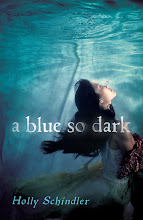
The MCs from both of my own published books are also definitely characters who feel on the fringes; in A BLUE SO DRAK, Aura feels outside the boundaries of “normal” life as she cares for her schizophrenic mother. In PLAYING HURT, Chelsea’s accident ends her basketball career, making her suddenly feel on the fringes with her former teammates.
Sure, there’s angst in my books, to use Giffin’s word. But there’s also, I’d argue, a sense of acceptance by the end of both novels. In BLUE, Aura is learning to accept both her family’s history of madness and her own creative impulses. In PLAYING HURT, Chelsea is finally accepting the end of her own playing days, while looking forward to a life returning to the game she loved in another capacity—her new dream, by the novel’s close, is to become a sports psychologist.
Maybe that’s a big part of moving from adolescence to adulthood: acceptance of oneself. Mistakes, flaws, warts and all. It’s being able to sing off-key in traffic and not caring that the windows are down. It’s finding a sense of humor about oneself. It’s that perspective Giffin mentions—it’s knowing I’m not perfect, but neither is everyone else. It’s knowing in some way or another, we’re all on the fringes.
Monday, July 2, 2012
INDEPENDENCE AND YA LIT
If I’m to define “independence” in the same way that I think
many teens view the term—as a word interchangeable with “adulthood”—I’d have to
say that I actually thrust independence on the main characters of both my
published YAs.
Take Aura, the MC from my debut, A BLUE SO DARK. Her mother, Grace, suffers from a mental
illness. And as the book opens, her
mother’s sinking deeper into the darkness of that illness. Grace’s condition leaves Aura to become, in
many respects, the parent. The
adult. (So much so, Aura and her best
friend, Janny, a teen mom herself, come to a new understanding, toward the end
of the novel.) Aura, in many ways, longs
for a “normal” life—to be the girl who gets to chase after her crush on a cute skater
boy, whose deepest worry is regarding an upcoming exam. In short, she wants to worry only about herself—a luxury that often accompanies
most teenage years. Instead, Aura has to care for another
human being. She’s responsible for that
human being (her mother), which is a very adult problem.
Take Chelsea, the MC from my second novel, PLAYING
HURT. Her dilemma isn’t quite as dark as
Aura’s, but it’s life-altering just the same.
Chelsea’s
a small-town athlete, a hero on the basketball court—until a horrific accident
shatters her hip and ends her basketball career all in the same fell
swoop. Again, Chelsea doesn’t ask to be released from the
demands of being a teen athlete. She
doesn’t want to be freed from the
grueling schedule. But she gets it,
anyway.
In all likelihood, Aura and Chelsea would find themselves
dealing with these scenarios later on in life: Chelsea would absolutely have to
learn to deal with life after basketball, and there’s a strong possibility that
someday Aura would find herself responsible for another human being, either as
a parent or as a friend (I’m not sure it’s really possible to have meaningful,
resonant relationships in life and not find
yourself caring for others—in many ways, it can be one of the most rewarding
aspects of adult life)…
But Aura and Chelsea
are thrown into these adult roles, headfirst.
They’re tossed into their adulthood in such a way that it can’t really feel like independence at
all. I think in many respects, that’s
the crux of a good story: by making a character’s world change around them, by
forcing a character to adapt to and navigate their new world, you can’t help
but illustrate how that character grows, changes, learns. In many respects, I think those curves life
tosses often make us who we are—and present a perfect opportunity, in YA
literature, for our teen characters to become their best selves.
Subscribe to:
Posts (Atom)