Showing posts with label Revision Heaven. Show all posts
Tuesday, September 29, 2015
AS TWO PROJECTS REACH SUNSET...SPARK (YA / HARPERTEEN) AND PLAY IT AGAIN (INDIE ADULT ROMANCE)
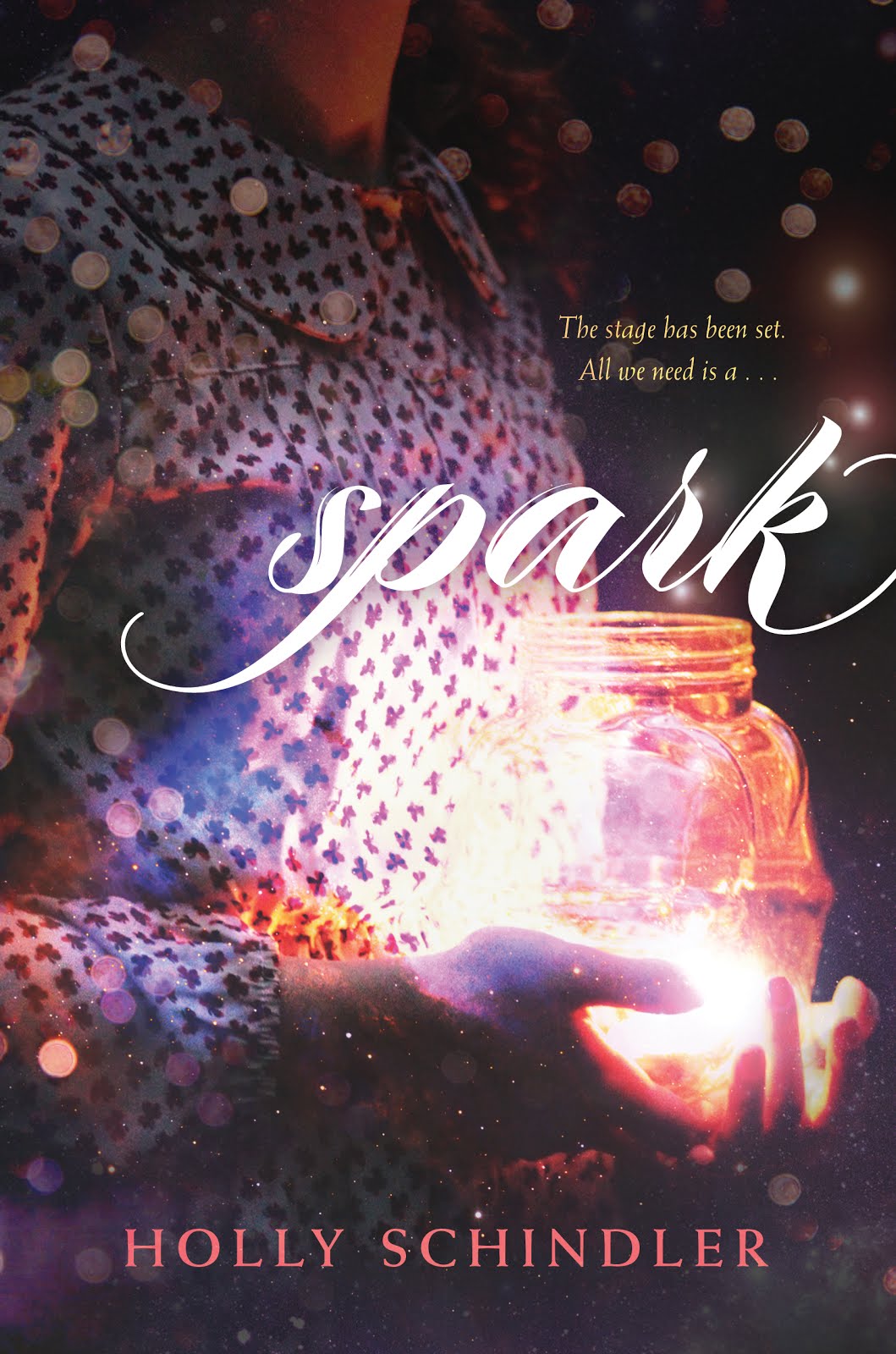
I'm coming to the end of two projects right now: I'm reading first-pass pages of SPARK, my forthcoming YA, and I'm copyediting PLAY IT AGAIN, my next indie release.
...After many months of juggling several projects, it feels really good to start to moving two of them to the "done" side of the ol' checklist...
Thursday, April 23, 2015
CELEBRATING MY INNER FOOL
The first time you do anything, you look like an idiot. No
first kiss ever didn't involve a
nose-bump. No first-time driver ever shifted gears perfectly. No writer will
ever tell you their first novel was BEAUTIFUL (most of the time, they’re in a
shelf somewhere collecting dust).
Here’s the thing, though: the first draft of every book
makes me feel like a fool. Doesn’t matter how many books I’ve written and
published. The first draft always makes me feel like I’m fifteen again, behind the
wheel for the first time.
Right now, I’m revising my next YA for HarperCollins. As I
read my editor’s comments, do I see some wrong turns I made the first time
around? You bet. I’ve got a better grip on the wheel, a better sense of where I
am in the lane, and I feel great about where I’m headed. I'm working my way toward a book I'm 100% proud of.
...All thanks to the fact that I was willing to look a little foolish the first time around...
Monday, January 5, 2015
CUTTING MANUSCRIPTS: DIALOGUE TAGS
Back when I first started writing full-length novels, 30K words was often a struggle. Now, the opposite is true: as I recently began revising my first indie release, an NA rom com, what started out as a 104K-word project quickly ballooned to 122K (and that was after I'd cut six chapters).
I didn't think I could cut another full chapter, so I asked via social media for authors' fave cutting techniques.
One suggested attacking unnecessary dialogue tags. It's turned out to be the absolute best (and simplest) revising technique I've discovered in years. Along with an unnecessary tag often comes unnecessary exposition. Whole paragraphs were deleted as I attacked the manuscript; conversations are now short and snappy and to the point (a plus, I think, when reading an e-book). Putting my focus on those unnecessary tags has brought the manuscript back down to the original 104K words.
I know I'm never going to read another book now without zeroing in on those tags (they'll bug me every bit as much as small talk in dialogue, and that can make me literally hurl a book across a room).
What are your own favorite manuscript-trimming techniques?
I didn't think I could cut another full chapter, so I asked via social media for authors' fave cutting techniques.
One suggested attacking unnecessary dialogue tags. It's turned out to be the absolute best (and simplest) revising technique I've discovered in years. Along with an unnecessary tag often comes unnecessary exposition. Whole paragraphs were deleted as I attacked the manuscript; conversations are now short and snappy and to the point (a plus, I think, when reading an e-book). Putting my focus on those unnecessary tags has brought the manuscript back down to the original 104K words.
I know I'm never going to read another book now without zeroing in on those tags (they'll bug me every bit as much as small talk in dialogue, and that can make me literally hurl a book across a room).
What are your own favorite manuscript-trimming techniques?
Monday, December 15, 2014
READER EMPATHY / LIKABLE NARRATORS
I struggle with the idea of the likable narrator all the time. As I stated in this post at my YA group author blog, YA Outside the Lines, I feel like part of my job is to present a character's unvarnished truth. (We're inside a character's head, after all--we should get a glimpse into all their thoughts, not just those of the more PC variety.)
I recently got this incredible bit of advice on the subject from a fellow author and had to share...
This author insisted that the focus shouldn't be on creating simply a likable narrator, but in creating reader empathy. To create empathy, a writer should pick two of the following:
1. Make the main character a victim of undeserved misfortune.
2. Put the main character in jeopardy.
3. Make the main character likable.
4. Make the main character funny.
5. Make the main character powerful or good at what they do.
This makes so much sense to me. Right now, in my NA-in-progress, both of my main characters are actually 3, 4, and 5 (the female is more 4 than the male), with a little of 2 sprinkled in. (Jackpot!) But I love the idea of focusing on empathy rather than likability (likability is only one option in the list for creating empathy).
Any other additions you might put on this list to create empathy--or to get a reader invested in a character's journey?
I recently got this incredible bit of advice on the subject from a fellow author and had to share...
This author insisted that the focus shouldn't be on creating simply a likable narrator, but in creating reader empathy. To create empathy, a writer should pick two of the following:
1. Make the main character a victim of undeserved misfortune.
2. Put the main character in jeopardy.
3. Make the main character likable.
4. Make the main character funny.
5. Make the main character powerful or good at what they do.
This makes so much sense to me. Right now, in my NA-in-progress, both of my main characters are actually 3, 4, and 5 (the female is more 4 than the male), with a little of 2 sprinkled in. (Jackpot!) But I love the idea of focusing on empathy rather than likability (likability is only one option in the list for creating empathy).
Any other additions you might put on this list to create empathy--or to get a reader invested in a character's journey?
Thursday, November 6, 2014
REVISION STRATEGIES
I'm up to my eyebrows in global edits for my first indie work, which is also slated to be my first New Adult. It hit me, as I plunged into the opening pages, that my strategy for revision changes with each book. A few of my favorite approaches:
I'm such a fan of this particular strategy, I've often suggested it to writing friends who find themselves stuck. (Admittedly, it works better if you're a good typist; I'm pretty fast, so it suits me.) The great thing about retyping (either problematic chapters or sections or the whole manuscript) is that you have to think about every single word you put in. Even if you're fast, you don't want to type something you don't have to...and even if you're fast, you move through the manuscript at a much slower pace. You find yourself rewording passages as you go, rethinking what you're doing in a way you never would simply rereading passages. I know it sounds like a massive undertaking, but it works. Seriously. If you just plain don't know where to take a WIP, I highly recommend printing your manuscript, opening a new file, and retyping the whole shebang. I'd bet just a few chapters in, you'll have an "Ah-ha!" moment.
I'm intrigued by non-linear writing; I've never tried it during the first-draft process, but as I've never been a fan of the first draft, I'm interested to find out if this helps to make that first run-through less of a struggle. For revisions, this process works great if you've gotten detailed feedback--either from an agent or an editor. I recently used this method to revise an MG; I read through the notes I received, and I attacked the scenes that interested me the most, regardless of where they appeared in the story. Then I read through the manuscript in full, smoothing out the smaller wrinkles as I went.
This is a natural fit for the book I'm working on now, which is divided into four large "parts." But it also works if you can (just for the purpose of revising) divide your book into at least three or four big chunks (think: setup, rising action, then climax and resolution). What I'm doing is rearranging the events, developing characters, etc. in one section, finishing it up completely before even thinking about the next chunk. It's far less stressful (and feels more manageable) to think about a single smaller portion of the story than it is to try to juggle all the pieces of an entire book all at once.
...I'm off to get back to that WIP. But while I'm working, what are your own favorite revision strategies?
RETYPING
I'm such a fan of this particular strategy, I've often suggested it to writing friends who find themselves stuck. (Admittedly, it works better if you're a good typist; I'm pretty fast, so it suits me.) The great thing about retyping (either problematic chapters or sections or the whole manuscript) is that you have to think about every single word you put in. Even if you're fast, you don't want to type something you don't have to...and even if you're fast, you move through the manuscript at a much slower pace. You find yourself rewording passages as you go, rethinking what you're doing in a way you never would simply rereading passages. I know it sounds like a massive undertaking, but it works. Seriously. If you just plain don't know where to take a WIP, I highly recommend printing your manuscript, opening a new file, and retyping the whole shebang. I'd bet just a few chapters in, you'll have an "Ah-ha!" moment.
NON-LINEAR REVISIONS
I'm intrigued by non-linear writing; I've never tried it during the first-draft process, but as I've never been a fan of the first draft, I'm interested to find out if this helps to make that first run-through less of a struggle. For revisions, this process works great if you've gotten detailed feedback--either from an agent or an editor. I recently used this method to revise an MG; I read through the notes I received, and I attacked the scenes that interested me the most, regardless of where they appeared in the story. Then I read through the manuscript in full, smoothing out the smaller wrinkles as I went.
WORKING IN SECTIONS
This is a natural fit for the book I'm working on now, which is divided into four large "parts." But it also works if you can (just for the purpose of revising) divide your book into at least three or four big chunks (think: setup, rising action, then climax and resolution). What I'm doing is rearranging the events, developing characters, etc. in one section, finishing it up completely before even thinking about the next chunk. It's far less stressful (and feels more manageable) to think about a single smaller portion of the story than it is to try to juggle all the pieces of an entire book all at once.
...I'm off to get back to that WIP. But while I'm working, what are your own favorite revision strategies?
Wednesday, October 16, 2013
REVISION SKIES
Why is it that I pay so much more attention to sunsets when I hit the revision stage of my WIPs?
Hmmm...
Hmmm...
Wednesday, August 22, 2012
LOST
I've been juggling revisions all summer long, which is like being in heaven for me. I love revision. Talking love here. Love. It's so easy for me to walk into my office and get lost in the process. And I mean lost. I'm talking, "Wait. What day is it again?" kind of lost.
Every once in a while, I'm reminded (usually by an insistent round of barking) that I need to get outside and knock the cobwebs off. A few scenes from my latest get-outta-the-house jaunt, at the Finley River in nearby Ozark:
| My dog, Jake, is always sooooo glad when the computer screen finally goes black... |
| ...and we walk near the Finley... |
| ...and check out the skies. I'm telling you, Missouri has the best skies. |
| And the sunsets aren't bad, either. |
Thursday, July 12, 2012
NATURAL BEAUTY
Dolly Parton's character in Steel Magnolias swore there was no
such thing. And I have a tendency to think that's also true of
literature. There is no novel that springs forth out of anybody's head
straight onto the page looking fabulous (just as nobody wakes up
honestly looking like a magazine spread). It takes work to look good, as Truvy was wont to say.

It's such a girly comparison, I know...But who among us hasn't sat in a beauty parlor, with bated breath, almost beside ourselves with anticipation as we cooked beneath a dryer? We just knew we were going to look so fabulous as a brunette / blond / redhead / with sleek, straight hair / short hair / extensions / spiral perm (ah, the 80's—I spent eight hours solid in a beauty parlor back in '88 to get my spiral)...Who has not honestly believed she would be a new woman when she left that parlor?
That's the revision process. It's putting your much-loved manuscript under the dryer, and just knowing that it's going go walk out looking like a NYT bestseller.
And now, back to my revisions...
Subscribe to:
Posts (Atom)