Showing posts with label Spark. Show all posts
Thursday, September 22, 2016
YA IN THE CLASSROOM - SPARK AND FLAWS
SPARK features two characters who have obvious "flaws": one has a birthmark, another a stutter.
This topic lends itself to great high school class discussion...
We all have things about
ourselves that we wish we could change. (If
only, we all think, I were prettier,
taller. Or, I wish I could make my
nose smaller, get rid of the scar on my chin, not have such frizzy hair, clear
up my skin…) If your fantasy could be granted, and what you perceive to be your
biggest flaw was magically erased, how would it change you? Would you behave
differently? Would you finally talk to your crush, go out for the lead in the
play? Would you step into the spotlight? Would you finally be brave enough to
make your mark?
Students can discuss the depiction of the external in SPARK--this includes costumes that appear throughout. They can also discuss the external vs. internal lives of the characters--and even of themselves. After all, sometimes, the best way to connect and interact with a book is by seeing connections between the text and the "real world."
Children are always being told the inside of a person is the most important part--and it is! But what are the barriers to getting to view a person's interior? How do our own opinions of our exterior, our perceptions of our own "flaws" keep people from seeing our own insides?
Are you a teacher using SPARK in your classroom? Contact me at hollyschindlerbooks (at) gmail (dot) com for a Skype.
Thursday, September 8, 2016
YA IN THE CLASSROOM - SPARK & METAPHORICAL EVENTS
Regardless of the genre or age category, my work tends to run on something of the lyrical side. I frequently use metaphor in my descriptions.
But my latest YA, SPARK, takes metaphor to a new level. Instead of using the device in order to flesh out description, I use it in the plot, as a way to drive events.
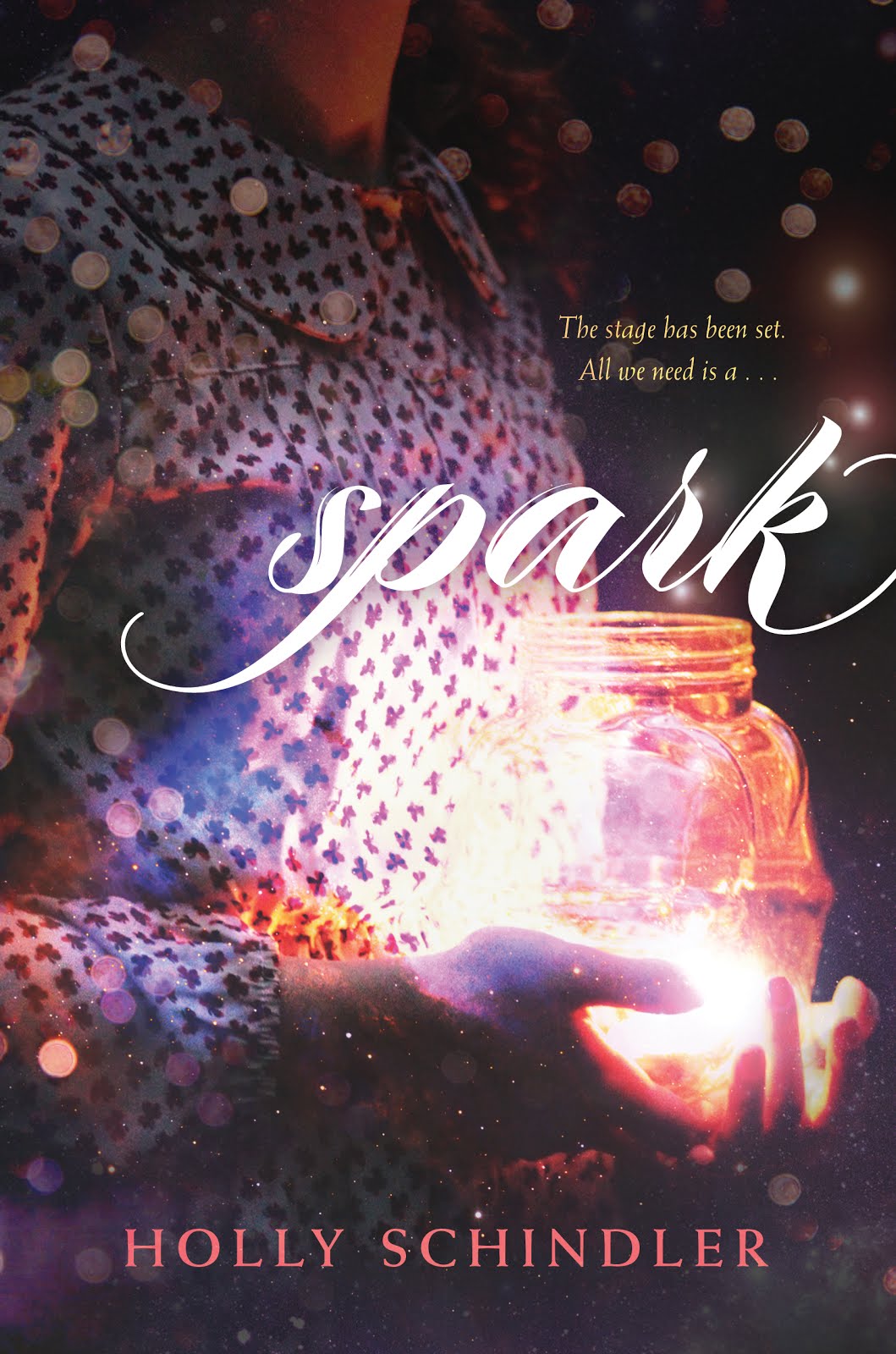
About SPARK:
~

But my latest YA, SPARK, takes metaphor to a new level. Instead of using the device in order to flesh out description, I use it in the plot, as a way to drive events.
About SPARK:
Acclaimed author Holly Schindler writes a
compelling contemporary tale with a dash of magic. The theater comes to
life in this story of family ties, fate, love, and one girl’s quest to
rewrite history.
The local Avery Theater was just a run-down building to Quin—until her mother told her about the tragic love that played out on the theater’s stage many years ago. Quin is convinced it’s the perfect story to re-create for her drama class. And when she does, the Avery begins to magically regain its former splendor, clearly setting the stage for her classmates Dylan and Cass to relive the romance from a time before. Quin can see the spark between them, but it’s up to her to make sure her friends—and the Avery—can both be saved this time around.
~

Ultimately, SPARK also asks readers to determine for
themselves what actually transpired: readers can debate, in class, whether they
believe the magical events of the book are to be taken literally, or are to be
read on a more metaphorical level, as the work of the protagonist’s “writerly imagination” (and have only
played out in the theater of young Quin’s mind). Did the Avery Theater magically regenerate? Did Quin's friends get a chance to see themselves without their flaws? Or has everything that has transpired on the pages actually a metaphor for the power of the theater? The way the theater allows us all to escape--whether we're in the audience or onstage?
~
Maybe the best widely-known example of using metaphor to shape the plot is FIELD OF DREAMS (one of my all-time favorite movies): Did those magical events really happen? Did Ray Kinsella actually plow up his corn, allow the spirits of historic ball players another chance to enjoy the game?
Or is the entire storyline a metaphor for a man trying to mend the fractured relationship with his father?
~
SPARK can open your students' minds to thinking about metaphor in a new way--as something that not only fleshes out line-by-line writing, allows a reader to see a character or setting in vivid detail, but as a device that can also help shape the events of the book as a whole.
Monday, August 22, 2016
FOR TEACHERS - LOCAL COLOR WRITING
I drew from my own Southwest Missouri surroundings in order to describe the Avery Theater in my latest YA, SPARK. The following video can be used in your classrooms to introduce the concept of local color to your students, and to get them revved to do a local color piece of their own:
Thursday, June 16, 2016
5 THINGS TO KEEP IN MIND WHEN WRITING FLAWED CHARACTERS
SPARK, my latest YA, is full of flawed characters. In fact, the entirety of
Advanced Drama is filled with students who believe themselves to be senior
nobodies—the dull, neutral shades in the crayon box. To some degree, every
single character you create should be flawed in some way. But what about those
characters who wear their flaws outwardly, conspicuously? How do you create a
flawed character who remains multi-dimensional?
Don’t
JUST make them flawed. Human beings are fully rounded. We all have
weaknesses and strengths. Make sure that every one of your “flawed” characters
also has a special strength or talent as well. In SPARK, Cass and Dylan are
arguably the most flawed of any of the characters in the book—or, at least, are
the most affected by their own flaws: Cass has a prominent birthmark, and Dylan
has a stutter. But they’re also incredibly talented musicians.
Don’t
dwell on it. In a way, this was easy in SPARK—the book is told from Quin’s
POV, so I didn’t have to worry that I was devoting too much of a character’s
internal monologue grumbling about their perceived flaws. But if your flawed
character does happen to also be telling the story, don’t allow their every
thought to be focused on this one physical or personality quirk. It can have a
stronger impact if you show how it affects their interactions with other
characters, then develop other traits once you’re inside their head, listening
to their thoughts.
Give
your character a sense of humor about it. This can actually help you create
a voice for your main character—let them be sarcastic. Or self-deprecating.
Humor always helps endear your main character to your reader, and in this case,
it keeps the book from seeming a bit melodramatic as well.
Give
them a scenario that forces them to face their flaw in some way. In SPARK,
Cass and Dylan literally have to step into the spotlight—a place they both
fear. What does your own character fear?
Why? How can it hold them back? How can they address it? This all helps add
drama, build to a climax.
Let your character
get over it. Or accept it. Or come to realize we all have perceived flaws.
Your main character(s) should grow and change internally. There’s nothing
tougher sometimes than self-acceptance. And it can make a really beautiful
story, especially when it’s a story for younger readers.
Subscribe to:
Posts (Atom)